
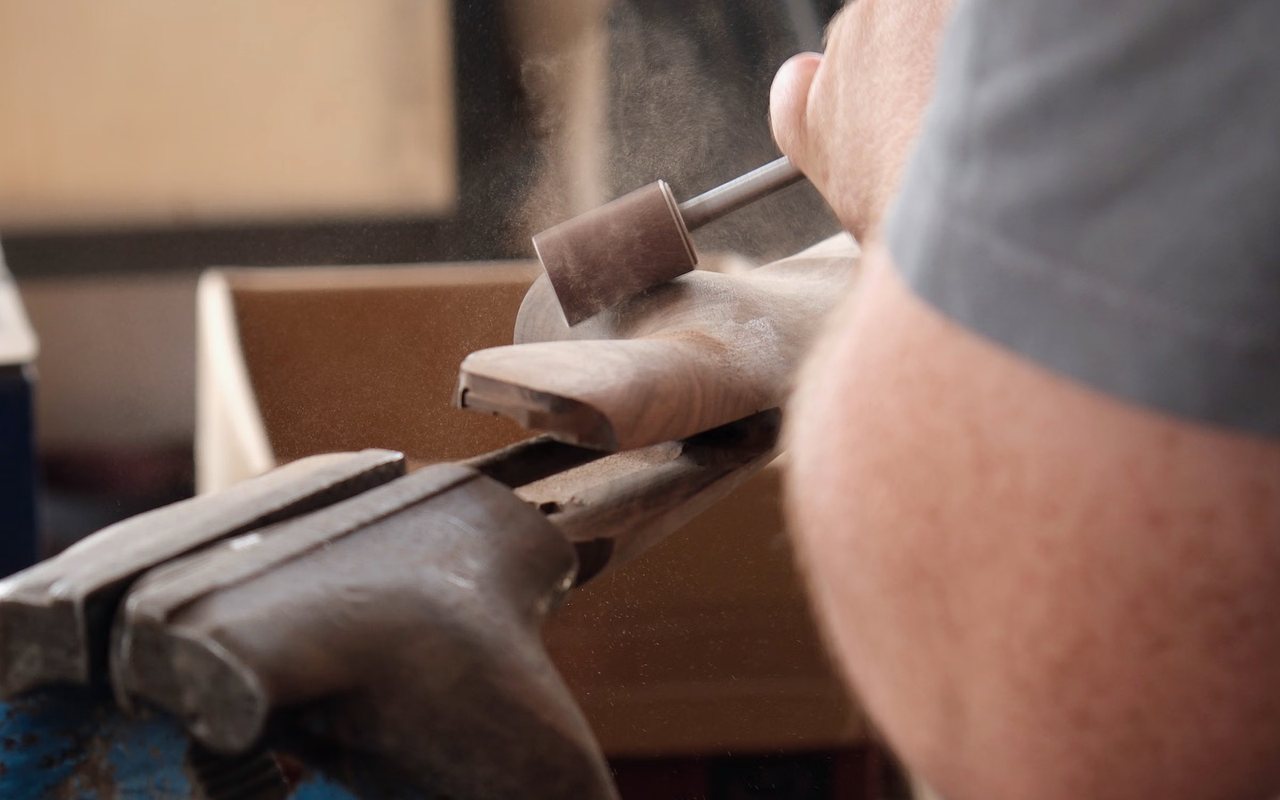
Assembly and check fixtures in Tijuana
A good fixture does not speed the assembly up — it makes doing it wrong impossible. That is the bar we hold every piece of tooling to.
Design first, machining second
The most expensive mistake in a fixture is machining it before understanding the operation. So we start with the part and the process: how the operator approaches it, which hand loads it, what has to be verified, where it jams today and how many seconds the cycle allows.
From there we design in SolidWorks, send you the model for approval, and only then machine. Design approval is a formal step, not a formality: it is where details get corrected while they are still cheap.
Real poka-yoke
A badly placed locating pin makes a fixture decorative. We work the geometry so the part seats in exactly one orientation, with ground pins, defined stops and reliefs where burr could lift the part and falsify the reading.
On check fixtures the critical property is repeatability: two different operators, on two different shifts, must get the same reading. That comes from ground pins and machined seating surfaces, not from adjustment screws.
Assembled, marked and delivered working
We deliver the complete fixture: machined base, mounted components, hardware installed and the part number laser-marked into the tooling itself so identification never gets lost.
Where the operation calls for it, we include a photo work instruction and an initial verification with known good and known bad parts, to demonstrate that the fixture actually rejects what it is supposed to reject.
What happens when the part changes revision
A fixture is not designed once. The part changes revision, the component supplier changes mold, the line speeds up, and tooling that worked stops working. That is why we put locating pins in interchangeable inserts wherever geometry allows: when revision B arrives you swap the insert, not the whole fixture.
We also keep the 3D model and the drawing of every piece of tooling we build, tagged with your part number. If in two years you need a copy for a sister plant or a modification from an engineering change, we start from the original file instead of measuring again. That file is yours, and we hand it over whenever you ask.
Shop capabilities
Typical assembly fixtures applications in Tijuana
- Wire harness assembly fixtures
- Dimensional check fixtures
- Electrical test nests
- Welding and clamping tooling
- Positioning bases for machining
- Line poka-yoke devices
Materials we machine
- 6061 and 7075 aluminum
- 1018 and 4140 steel
- Delrin and UHMW for soft contact
- Stainless for sanitary environments
- G10 and phenolic for insulation
Frequently asked questions about assembly fixtures in Tijuana
It helps a great deal, though it is not essential if the 3D model is complete. With the part in hand we catch burr, deformation and real-world variation the CAD never shows, and the fixture comes out right the first time.
Two to four weeks depending on complexity, including design approval time — usually the step that stretches. If your project has a line start date, say so at quoting and we schedule backwards from it.
Yes. We measure it, draft the print and build as many copies as you need. That is standard when a line is duplicated or a sister plant needs the same tooling.
Have a print ready to quote?
Send us the drawing in PDF, STEP, IGES or DXF. You get a technical proposal and pricing in under 24 business hours — and a free sample part when the project calls for it.